
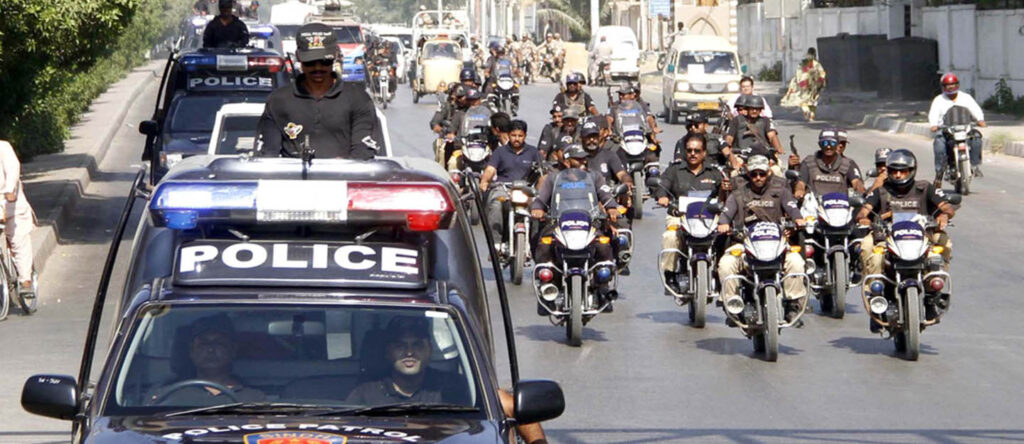
The modern police system in Pakistan traces its lineage to the Police Act of 1861, a colonial law enacted by the British Raj in the aftermath of the 1857 uprising. Designed to secure imperial authority rather than serve the public, the Act established a force characterized by rigid hierarchy, centralized control, and loyalty to the executive. This framework survived independence in 1947 with only minor adaptations, continuing to define police organization in Pakistan.
Subsequent reforms—most notably the Police Order of 2002—sought to reorient the institution toward accountability and service. That law envisioned public safety commissions, independent complaint authorities, and depoliticized transfers. Yet, in practice, the entrenched colonial ethos remained intact. Provincial legislatures after the 18th Amendment (2010) reasserted control by replacing the Police Order with variations of the 1861 model, thereby re-centralizing authority in the hands of political executives.
Against this historical backdrop, Pakistan’s police today can be described through three interlinked metrics:
- Centralized Command
The police remain bound to the executive branch—whether the federal interior ministry, provincial home departments, or chief ministers’ secretariats. Senior officers (Inspectors General, Regional and District Police Officers) operate less as autonomous commanders and more as extensions of political authority. Decision-making flows downward in a command-and-control fashion, limiting operational independence and reinforcing the colonial purpose: to maintain order for rulers rather than ensure justice for citizens. - Centralized Compensation
The financial architecture of the police reflects dependence on the central purse. Salaries, allowances, and pensions are uniform civil service scales determined by government pay commissions. Local governments neither raise nor allocate independent revenues for policing. This means police officers are economically tethered to bureaucratic treasuries and political elites, rather than incentivized to be accountable to the communities they serve. - Hires and Transfers Inter-Regions
Perhaps the most politically exploited feature is the control over postings and transfers. Officers are recruited centrally through federal or provincial commissions, then posted across districts and provinces, often with little regard for local knowledge or continuity. Transfers are wielded as tools of patronage and punishment, producing a “floating” police cadre beholden not to law or locality but to political masters who control their careers.
In sum, Pakistan’s police remains a centralized enforcement arm, historically engineered for control, sustained by centralized financing, and manipulated through centralized postings. It is a system where loyalty flows upward to political authority rather than downward to society—a legacy of colonial governance that continues to undermine the emergence of a citizen-centered policing model.